
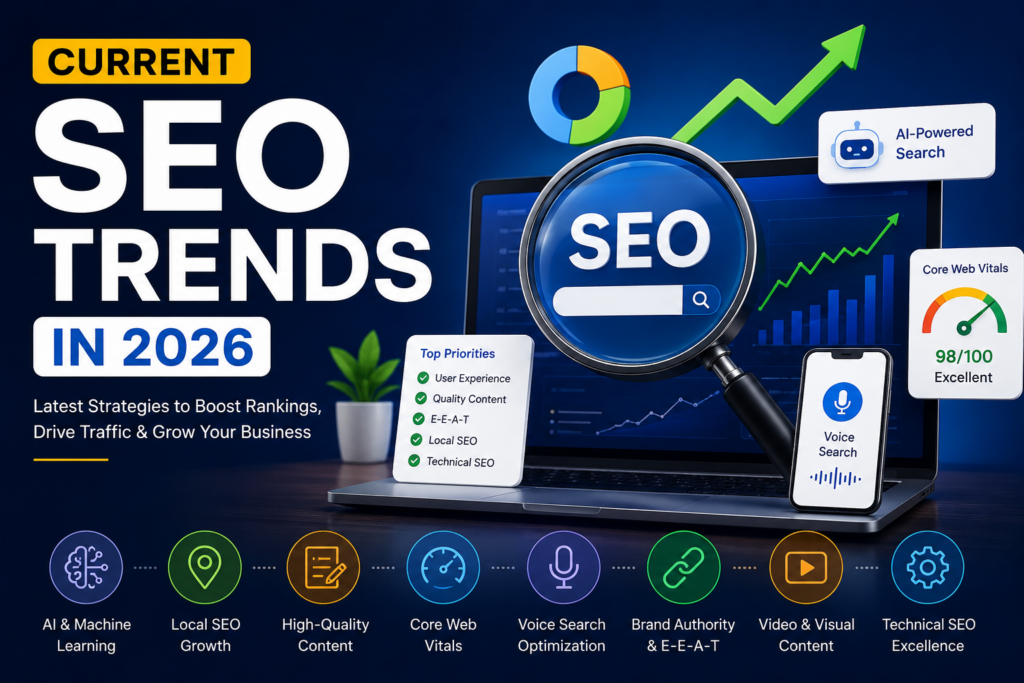
Search Engine Optimization (SEO) continues to evolve rapidly as search engines become smarter and user expectations grow. In 2026, ranking on Google is no longer just about keywords and backlinks—it’s about delivering valuable, trustworthy, and user-focused content. Businesses that adapt to the latest SEO trends are more likely to attract qualified traffic, improve online visibility, and stay ahead of the competition.
1. AI-Powered Search is Reshaping SEO
Artificial Intelligence (AI) has transformed how search engines understand and rank content. Google’s AI-driven search systems analyze user intent rather than simply matching keywords. This means businesses must create content that genuinely answers users’ questions instead of relying on keyword stuffing.
Well-structured articles, clear headings, FAQs, and comprehensive content are now essential for improving visibility in AI-powered search results.
2. Search Intent Matters More Than Keywords
Modern SEO focuses on understanding why users perform a search. Whether someone is looking for information, comparing products, or ready to make a purchase, your content should align with that intent.
For example, a user searching for “best digital marketing agency” expects comparisons, reviews, and service details rather than a generic definition of digital marketing. Creating content that satisfies user intent leads to better rankings and higher engagement.
3. Experience, Expertise, Authority, and Trust (E-E-A-T)
Google increasingly rewards websites that demonstrate Experience, Expertise, Authority, and Trust (E-E-A-T). Businesses can strengthen these signals by publishing high-quality, original content, showcasing expert authors, displaying client testimonials, and maintaining accurate business information.
Including case studies, customer reviews, certifications, and transparent contact details helps build credibility with both users and search engines.
4. High-Quality Content Remains King
While AI tools can assist with content creation, originality and usefulness remain essential. Google prioritizes content that provides genuine value rather than automatically generated articles with little depth.
Successful content should:
- Solve user problems.
- Answer frequently asked questions.
- Include updated statistics and examples.
- Be easy to read with proper formatting.
- Offer actionable insights.
Businesses that consistently publish informative blogs establish themselves as industry authorities.
5. Voice Search and Conversational Queries
The growing use of voice assistants has changed the way people search online. Users now ask conversational questions such as, “Which is the best SEO company near me?” instead of typing short keyword phrases.
Optimizing for natural language, question-based headings, and FAQ sections improves your chances of appearing in voice search results.
6. User Experience and Core Web Vitals
A fast, responsive, and user-friendly website is critical for SEO success. Google’s Core Web Vitals measure loading speed, visual stability, and interactivity. Websites that load quickly and provide a seamless browsing experience are more likely to achieve higher rankings.
Optimizing images, reducing unnecessary scripts, improving server performance, and ensuring mobile responsiveness all contribute to better user experience and SEO performance.
7. Local SEO Continues to Grow
For businesses targeting local customers, Local SEO remains one of the most effective digital marketing strategies. Optimizing your Google Business Profile, collecting customer reviews, maintaining consistent business information across directories, and targeting location-specific keywords can significantly improve local search visibility.
Local searches often have strong purchase intent, making them valuable for generating qualified leads.
8. Video and Visual Content Support SEO
Search engines increasingly prioritize multimedia content. Videos, infographics, and interactive visuals enhance user engagement and increase the amount of time visitors spend on your website.
Embedding relevant videos, optimizing image alt text, and creating visual explanations of complex topics can improve both user experience and search performance.
9. Technical SEO is More Important Than Ever
Technical SEO forms the foundation of a successful website. Proper website architecture, XML sitemaps, schema markup, HTTPS security, crawlability, and mobile optimization help search engines understand and index your content efficiently.
Regular technical audits ensure your website remains healthy and free from issues that could negatively impact rankings.
Conclusion
SEO in 2026 is centered around delivering exceptional user experiences, creating valuable content, and building trust. Businesses that focus on user intent, technical excellence, AI-friendly content, and authoritative information are more likely to achieve long-term success in organic search.
Rather than chasing search engine algorithms, organizations should prioritize helping their audience solve real problems. By combining strategic content creation, technical optimization, and continuous performance analysis, businesses can build a sustainable SEO strategy that drives consistent traffic, quality leads, and measurable business growth.